

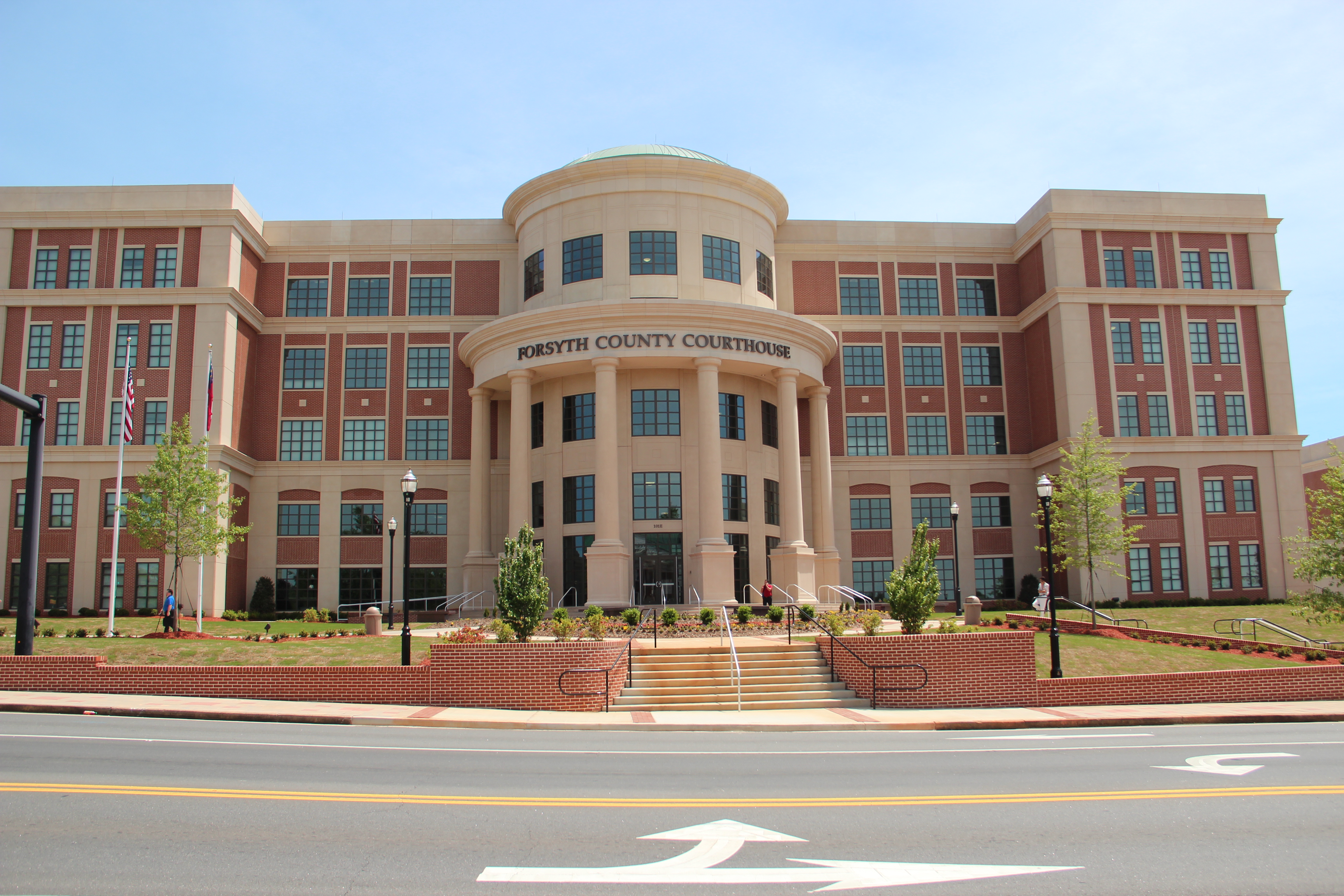
Forsyth County Courthouse in Cumming, Georgia. Photo: Thomson200, April 27, 2015, via Wikimedia Commons. CC0 public domain.
Forsyth County’s residential rezoning moratorium is scheduled to end on October 25th. But this residential moratorium does not affect every property or every application the same way. For buyers, developers, and landowners, the useful question is more specific: Which restrictions apply to this parcel and what approvals are needed next?
Two separate moratoria have different scheduled end dates. One addresses residential rezoning applications. The other addresses sketch plat and land disturbance permit applications for certain properties with older residential zoning classifications. Treating them as one blanket development freeze can lead to expensive assumptions about acquisition timing, redesign costs, and when an application can actually be submitted.
The residential rezoning clock
The residential rezoning moratorium is scheduled to last through October 25, 2026. Forsyth County’s April 28th resolution extends the moratorium on accepting covered residential rezoning applications while allowing applications seeking RES1, Mixed Residential District, or Mixed-Use Commercial District zoning.
That distinction makes the proposed zoning district critical to the analysis. A buyer evaluating land for a residential project should identify the zoning district required by their development plan before assuming the moratorium prevents the filing of an application. Changing a label on a concept plan is not enough; the intended uses and design must be evaluated against the applicable zoning district’s requirements.
RES1 MRD and MCD exceptions
These exceptions create a filing path for applications seeking these three districts. Filing an application to rezone to one of these excepted districts does not guarantee approval, establish that a particular design complies with the Unified Development Code, or resolve every subsequent permitting issue.
For example, a project that can be submitted under an excepted rezoning district still needs a realistic approval strategy. Site constraints, zoning conditions, required infrastructure improvements, and subsequent permitting applications remain part of that evaluation.
The clock for older residential zoning
The separate sketch plat and land disturbance permit moratorium is scheduled to last through November 17, 2026. It affects certain residentially zoned properties that were rezoned before April 13, 2017.
This is where having an existing residential zoning classification can create false confidence. A property may not need a rezoning approval covered by the first moratorium, yet its next sketch plat or land disturbance permit application may require review under the second moratorium. Therefore, if the residential rezoning moratorium expires on October 25th, that expiration does not answer every question or resolve every issue about an older residentially zoned tract.
The property’s zoning history matters. Obtain the actual rezoning decision, conditions, approved exhibits, and relevant permitting records. A current zoning map designation tells only part of the story; the approval date and subsequent actions can be essential to understanding what entitlements the owner has and what approvals may still be needed.
What to verify before October 25
Start with current zoning and jurisdiction. Confirm that the parcel is subject to Forsyth County’s rules, and verify its zoning through the underlying records. Then establish when the residential rezoning occurred and whether later approvals changed the relevant conditions or development plan.
Next, identify the proposed zoning district and application type. Are you seeking new zoning, a sketch plat, a land disturbance permit, or another type of approval? Different applications can raise different timing issues. Evaluate prior approvals and any claimed vested rights separately using the specific facts and documents supporting your claim.
Finally, confirm which moratorium applies, its exceptions, and the latest action taken by the County. Check the applicable submittal requirements and filing deadlines before finalizing a closing date or promising a construction start date. A scheduled moratorium expiration is not itself an application deadline, a development approval, or a guarantee that every restriction will disappear.
Make the calendar part of your due diligence
Keep a written record of the County’s responses and the materials reviewed. Clear documentation helps the buyer, seller, engineer, and attorney plan around the same verified assumptions.
For a pending acquisition, these questions should be answered during the due diligence period before major commitments are undertaken for design and construction. This review can help identify whether the transaction’s closing needs more time, whether the contemplated application is currently eligible for submission, and which documents are missing from the seller’s files.
Scoggins Law Group helps property owners and developers evaluate zoning, land use, and real estate issues. Before acquiring or redesigning residentially zoned property, review the approval path with the parcel’s history in hand.
Do not treat “residential moratorium” as a complete answer. Review the property’s zoning, proposed application, prior approvals, and applicable deadlines. The right strategy begins with knowing which clock applies.